A studio for middle schoolers in grades 6 through 8. They learn what it takes to build software in the AI age — scoping it, directing AI to build it, fixing what breaks, and shipping something they're proud of. We're running our pilot cohort in Spring 2027, starting in January.
Your kid can already talk to ChatGPT. That's not a skill.
The competition isn't another coding camp. It's the chatbot already open in another tab. Asking AI for homework help is table stakes now. The skill that matters — and the one no school is teaching — is taking an idea, scoping it, building it, and shipping it. Putting a working product into the world where someone can actually use it. We teach kids to be builders with AI, not just users of it.
01
Builders, not users.
Most kids will grow up using AI to ask questions and get answers. We teach them to use AI to make things. The kid scopes the project, picks what good looks like, and directs AI through every decision. AI is the engineer. The kid is everything else.
02
The real builder stack.
The same AI-powered build tools real founders use to ship software — including Lovable and Claude — scaled to projects a 12-year-old can own end-to-end.
03
Demo days, not certificates.
Every term ends with a public demo. Kids show their working product to family, friends, and other students. A live URL. A real app. Something that exists in the world.
Every generation has a shift that splits kids into two groups. Computers in the 80s. The internet in the 90s. Smartphones in the 2010s. The split wasn't about who used the new tool. It was about who learned to build with it. The kids who built websites in 1998 didn't all become developers. But they grew up believing they could make things on the internet. That instinct compounded for the next 25 years.
We're in that moment again, and the gap is going to be wider this time. AI is going to do more and more of the actual making. What AI can't do is decide who something is for, when it isn't working, and what to do next. That's the work this program teaches. Kids who learn it now will spend their twenties building things that matter. Kids who don't will spend their twenties catching up.
Your kid leaves the pilot with a working product, the experience of building it, and the muscle memory to do it again. That's the foundation.
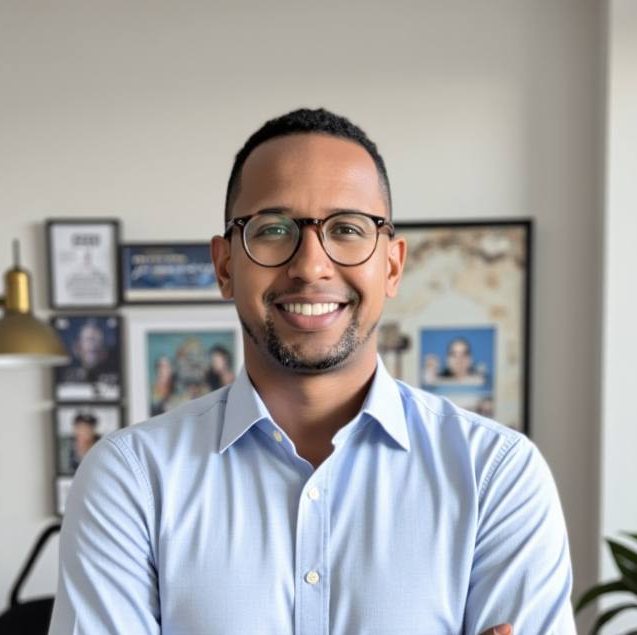
Justin Gaither
Co-Founder · Entrepreneur · Founder of The BNB Exchange
B.B.A. FinanceUniversity of Miami
Built and soldRoomSurf · 2018
Operates20+ short-term rentals
CivicCharlotte Chamber Board (former)
Builds AI toolsDaily, in production
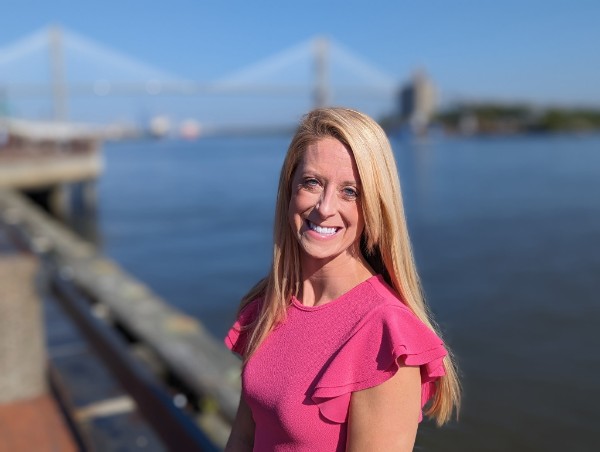
Leigh Anne Gaither
Co-Founder · Head of Education
M.Ed. Elementary EdUniv. of South Carolina
Classroom experienceCharlotte-Mecklenburg Schools
Online teachingNC Virtual Academy
Uses AI dailyLesson planning & instruction
A note from Justin & Leigh Anne
We're parents who already lived this change. Justin spent a small fortune and months of work launching his first internet company in 2010. He just launched his current company, The BNB Exchange, in a week, by himself, with AI as his engineering team. Leigh Anne used to write lesson plans by hand. Now she uses AI to design engaging virtual lessons that hold middle schoolers' attention, and she's helping other teachers do the same.
We see what's coming. We're not waiting for school to handle it. The Onward School is what we're building for our kids. We'd be honored to build it for yours too.
— Justin & Leigh Anne
About the pilot
Six kids. One pilot. Then more cohorts.
We've spent the last year designing this carefully. We're starting with a single, intentionally small cohort so we can put real attention on every kid and learn what works best in this new age of AI. Pilot families help shape what comes next, and they get founding member benefits going forward.
01
What we're learning.
The right way to teach middle schoolers to direct AI and ship real products. What clicks for an 11-year-old vs. a 13-year-old. Which moments light a kid up and which ones lose them. Six builders, two founders, twelve Saturdays.
02
What pilot families pay.
$499 for the full 12-week pilot. Significantly less than the regular cohort price will be. Pilot families also lock in founding member pricing for the first year of future cohorts. The discount reflects what we're asking of you: going first.
03
Where we'll meet.
A welcoming partner space in the Fort Mill area. The exact location is shared with families once they're accepted into the cohort.
We are not pretending to have everything figured out about teaching middle schoolers in an AI world. We are figuring it out alongside the families who choose to do this with us.
How the build works
12 weeks. One shipped product.
Each session is two hours on Saturday morning, sometime between 9 AM and noon (exact time confirmed when the space is locked). Every term ends the same way: with a real product the kid can show you.
The 12-week arc
Wks 1–2
Pick the project.
Choose a build type from the menu. Decide what you're making and what "done" looks like.
Wks 3–4
First working version.
Get something on screen using Lovable or Bolt. Ugly is fine. Working is the goal.
Wks 5–8
Build and iterate.
Add features. Fix what breaks. Make it actually do what it should. The hard middle.
Wks 9–10
Polish.
Real design, real content, real names. Make it look like something they're proud of.
Wk 11
Get someone to try it.
Hand it to a parent, sibling, friend, or coach. Watch them use it. Fix what trips them up. This is how every real builder learns what to fix.
Wk 12
Demo day.
Each builder presents their shipped product. Parents come. Kids see what their peers built.
What kids might build.
Every student builds something they actually care about. We help them shape that idea into a project that can ship in 12 weeks. A few of the directions we're set up to support:
Trivia / quiz game
Build the ultimate NBA trivia for the group chat.
"Which ___ are you?" quiz
Make a "which Hogwarts house are you" quiz for your friends to argue over.
Mini-game
Code a reaction-time game your friends will lose to.
Tier list maker
Rank your favorite NBA players and settle the debate.
Small business / side hustle site
Launch a real site for the lawn-care, dog-walking, or gaming-coach business you're starting.
Team or club site
Build the site your travel team or robotics club has needed forever.
Pilot families get founding member pricing on future cohorts.
Common questions
What parents want to know.
Your child spends 12 Saturday mornings with us, learning to direct AI to build real software. They pick what they want to make. We coach them through scoping it, building it, breaking it, fixing it, polishing it, and presenting it. By the end of the pilot, they have a working product with a live URL and a permanent profile page that shows what they built. Six students in the room, both founders coaching every session.
Teaching middle schoolers to build with AI is genuinely new. The right way to do this hasn't been written yet. We'd rather work it out with six kids in a room than guess our way through a bigger group. Pilot families get a hand in shaping what comes next, and the cohorts that follow get the benefit of everything we learn.
$499 for the full 12-week pilot. That's significantly less than future cohorts will be priced. Pilot families also lock in founding member pricing on future cohorts. The lower price reflects that you're going first.
A welcoming partner space in the Fort Mill area. We share the exact location with families once they're accepted into the cohort.
More cohorts. We'll run them based on what we learn from this one. Pilot families get first pick of future cohort spots at founding member pricing. If we find we want to refine the program meaningfully before opening more broadly, we'll do that. Either way, pilot families are kept informed and the founding member benefits are honored.
Yes. The whole point is that AI handles the syntax. We teach the thinking, the scoping, and the building. Kids with zero technical background ship working products by week 6. The skill being taught is "how to direct an AI to build something useful," not "how to type code."
Coding camps teach kids to write code. We teach them what it takes to build software in the AI age — scoping a project, directing AI to build it, debugging what breaks, polishing it, and shipping it. The output isn't a coding exercise. It's a real working product with a live URL that your child built and can show you.
At minimum, a laptop from the last few years that runs Chrome works fine — everything we use is browser-based. For the pilot, we may also provide loaner machines depending on where we end up meeting. We'll confirm with each family during the application process so no one shows up underprepared.
We'll have an honest conversation by week 3 or 4. If it's not the right fit, we refund the unused portion of the pilot. We'd rather have five kids who are bought in than six where one is miserable. The point of a pilot is to learn together.
Yes, in a deliberate way. Projects are published under Onward-managed infrastructure, which means we control who can see what and can take anything offline in seconds. First-time builds intentionally avoid open public text inputs, public chat, and photo uploads. The goal is real publishing, with age-appropriate guardrails. Parents sign a publishing waiver at enrollment so this is explicit, not assumed.
Their app stays live on Onward infrastructure for 12 months after the pilot, no cost. After that, families can keep hosting it through us at low cost, or your child can take the code with them. Either way, their permanent Onward Profile — screenshots, description, walkthrough videos — stays online indefinitely so they can always point to what they built.
Pilot cohort
Six spots. Tell us about your kid.
Apply for one of six spots in our pilot cohort, running 12 Saturdays in Spring 2027, starting in January, in the Fort Mill area. We'll review your application and respond within a week. If it's a good fit, we'll set up a 15-minute call so you can ask anything and we can both decide if this is right for your child.
Founding member pricing on future cohorts
Application received.
We'll review your application and get back to you within a week. If it's a good fit, we'll set up a 15-minute call. Watch your inbox.